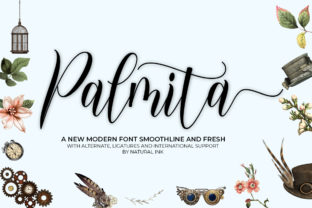
Palmita: A Romantic Script Font for Crafters
As a maker who spends hours perfecting labels, cutting intricate vinyl decals, and designing wedding invitations, I know that the right typeface can make or break a product. It is not just about how a word looks on a screen; it is about how it translates to paper, fabric, glass, and wood. That is why finding a modern typography option like Palmita feels like discovering a new favorite tool in your creative kit. This joyful and modern calligraphy font features an incredibly romantic flow that instantly elevates any handmade project from simple to sophisticated.
The Visual Personality of Palmita
When you first open the Palmita file in your design software, the difference is immediate. Unlike stiff, overly formal scripts, this script font has a bouncy, flexible energy. It mimics the natural rhythm of a hand holding a pen, creating strokes that feel alive and organic. The "bouncy" quality described in its profile isn't just a marketing term; it translates into a visual warmth that customers subconsciously associate with care and craftsmanship.
In the world of Fonts, specifically within the Script Amp category, Palmita stands out because it balances legibility with artistic flair. Many decorative scripts become unreadable when scaled down or printed on textured surfaces, but Palmita maintains its structure. Its curves are smooth, and its letterforms connect seamlessly, making it an excellent choice for both short phrases and slightly longer sentences where readability remains crucial. Whether you are designing a logo for a boutique candle line or writing a heartfelt message on a greeting card, this typeface delivers a consistent, high-quality aesthetic.
Practical Applications for Handmade Products
The true test of any creative font is how well it performs across various mediums. I have found Palmita to be exceptionally versatile for physical products. For instance, when creating custom labels for small-batch soaps or candles, the romantic flow of the letters adds a premium touch that justifies a higher price point. The fluid lines catch the light beautifully on glossy sticker finishes, while remaining crisp enough for matte kraft paper.
Beyond labels, Palmita shines in the realm of wedding stationery. As a designer of printable templates and invitation suites, I often need a font that can handle names and dates with elegance without looking outdated. Palmita fits perfectly here. Imagine a wedding welcome board where the couple's names are written in this bouncy script against a rustic wooden background. The contrast between the modern calligraphy and the raw material creates a stunning focal point. Similarly, for packaging design, using Palmita on gift tags or box seals transforms a standard shipment into a curated unboxing experience.
For those of us working with cutting machines like Cricut or Silhouette, Palmita offers a unique advantage. Because the letterforms are distinct yet connected, they cut cleanly without leaving fragile bridges that might snap during weeding. This makes it ideal for:
- Wall Art: Creating large-format vinyl decals for nurseries or living rooms with inspirational quotes.
- Apparel: Designing heat-transfer vinyl for tote bags, t-shirts, and aprons where a feminine, handwritten look is desired.
- Seasonal Decor: Crafting holiday signs and window clings that need to feel festive yet refined.
- Digital Downloads: Selling planner stickers and journaling cards where the font needs to look good on a tablet screen as well as in print.
Enhancing Brand Identity and Perceived Quality
Choosing a font is a strategic decision for any small shop owner. Your typography contributes significantly to your brand identity. If your business sells luxury goods, a clean serif font might work, but if you offer handmade, heartfelt items, a handwritten font like Palmita communicates emotion directly to the buyer. It suggests that the product was made by a person, not a machine.
This emotional appeal is vital for customer recognition. When a client sees your social media graphics featuring Palmita, they begin to associate that specific style of lettering with your brand. Consistency is key. Using this display font across your website, Instagram posts, product packaging, and business cards creates a cohesive visual language. It tells the customer that every detail, down to the smallest text element, has been thoughtfully considered.
Furthermore, the perceived quality of your products often hinges on these small details. A generic system font on a label can make a $30 artisan soap look like a drugstore item. Switching to a premium font like Palmita immediately signals value. It shows that you invest in professional design assets, which builds trust and encourages repeat purchases.
Readability and Technical Considerations
While beauty is essential, functionality cannot be ignored. One of the strengths of Palmita is its flexibility regarding size and context. However, as with any script, there are limits. For very small text, such as ingredient lists on tiny jars, a clean sans serif font is usually safer. Palmita is best reserved for titles, names, short slogans, and decorative elements where the viewer has time to appreciate the curves.
When preparing files for cutting machines, always check the node count and path integrity. Palmita generally converts well to vector paths, ensuring smooth edges when cut. For printables, ensure you are exporting at 300 DPI to maintain the crispness of the thin strokes. If you are using this font for web design or social media graphics, the web version renders smoothly, keeping your digital storefront looking as polished as your physical shop.
Don't forget to explore the included styles. Many modern calligraphy fonts come with alternates, ligatures, and swashes that allow for customization. With Palmita, you can tweak individual letters to fit the layout perfectly, avoiding awkward spacing or collisions. These extra characters add another layer of uniqueness to your designs, preventing them from looking like everyone else's template.
Mastering Font Pairing with Palmita
No font exists in a vacuum. To create balanced designs, you need to master font pairing. Since Palmita is expressive and decorative, it pairs best with neutral, structured typefaces. A classic combination involves pairing Palmita with a geometric sans serif font. The simplicity of the sans serif provides a solid foundation, allowing the romantic flow of the script to take center stage without overwhelming the viewer.
Alternatively, for a more traditional or vintage look, try pairing Palmita with a classic serif font. This combination works wonderfully for wedding invitations and elegant product packaging. The serif adds a touch of formality that grounds the playfulness of the script. Avoid pairing Palmita with other complex display fonts, as this will create visual clutter and reduce readability.
Licensing and Commercial Use
Finally, for all the Etsy sellers and small business owners reading this, understanding licensing is non-negotiable. Palmita is designed as a commercial font, meaning it is suitable for use in products you intend to sell. This includes physical goods like mugs and shirts, as well as digital downloads like SVGs and templates. However, always review the specific End User License Agreement (EULA) provided with the font download.
Generally, you can use Palmita in your logo design and branding materials, and you can incorporate it into products sold for profit. But remember, you cannot resell the font file itself or claim ownership of the typeface. By respecting these guidelines, you protect your business and support the independent designers who create these beautiful tools. With Palmita, you have a powerful asset to elevate your craft, attract customers, and build a brand that truly reflects your creative spirit.